Friday, December 29, 2006

BiRDSEED by Beta


This is the cover of my latest chapbook.

Considering that Beta Blog was initiated earlier this year with a chapbook of poems from Texas, this bookends the year of 2006 for me rather succinctly. Guess I did get a few things done this year. While the Texas book covers 1993-2003, the work contained herein is from 2005. I mentioned it here casually and now it's an actuality.

BiRDSEED is culled from observations, unfinished poems, scribbled notes, shopping lists, overheard dialogue, and other small bits recorded in the calendar year of 2005, whether it be in Brooklyn, Costa Rica, Austria, or Texas. Back when I still had a caged bird singing, papers left lying around my room would accrue strewn birdseed on their surface and so that image informs the lines, words, and the pages themselves. The work is both scattered and compact. Anything can be a cage, be it a bedroom or a subway car or a helicopter or the body itself. Or as I joked to one friend about the work within: hard to crack, easy to swallow.

After the arduous task of editing and laying out the Texas book (ten years to craft, two years to tweak and fuss over, dozens of drafts, plus six months to ink, fold, and sew), BiRDSEED was intended to be a breezy affair. Less suffering oover the lines, things left as is. Of course, laying out the artwork this go-around proved insurmountable, so all praises due to Brooklyn's patron saint of the cover arts. Once again, every copy is individually handmade and wholly unique, from cover to stitching to the surprises contained within each book. Drop a line if you wish to peck at this.

Friday, December 22, 2006

Friday, December 08, 2006

2 or 3 things you know about beta


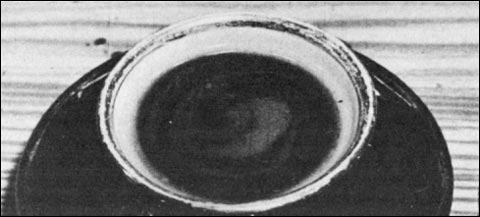
A saucerful of secrets?

***

The Blue Velvet Blend probably goes great with homemade cherry pie. Even the other kind.

***

The last three movies I have watched: Lynch's Inland Empire, Godard's 2 or 3 Things I Know About Her, and Mizoguchi's Ugetsu all dabbled in the spectre of hoing. Perhaps it's to offset either the weeping virgin glued to the tube in Empire or else the pristine, glamorous actress played by Laura Dern. One aspect of her persona is above such muck, yet another is down with the bleary-eyed, syphilitic Polish whores, grinding to "The Loco-Motion" and being real 'street' at the corner of Hollywood and Vine. Prostitution is then the ideal role when lolling in the gutters of reality, the few with eyes and legs spread, looking up at the stars?

Said act ballasts the countermelodic couple in Mizoguchi's film, yet one extreme on the wheel of fate. As husband Tobei ascends as a samurai, Ohama the wife is abandoned, left to be raped by roving soldiers and to earn her gold in that manner. Only when Tobei sheds his role in society does a sense of balance (no mo hoing) return. Godard of course opines that it might be the only poetic job within capitalism. Desire becomes dollars, flipping mattress-backs into sawbucks. It's as writer Nick Tosches once posited, if you're going to be a whore, at least be a high-priced one.

Juliette Janson, Godard's waterbearer for all things feminine in 2 ou 3 Choses Que Je Sais d'Elle, absorbs such extremes, playing two roles that are on the verge of appearing as separate entities. She is herself; she is Paris: "I was the world, the world was me." She is both mother and whore, but neither twain quite resolves within her.

Her son recites a dream early on:
I was walking all alone at the edge of a cliff. The path was only wide enough for one person. Suddenly I saw two twins walking toward me. I wondered how they would get past. Suddenly one of the twins went towards the other and they became one person. And then I realized that these two people were North and South Vietnam being united.
Not bad for a sleepy four-year-old in 1966, but maybe it's just easier for men to mash such disparities together? Mom counters with her own unredeemable dillemas: "In my dreams I used to feel that I was being sucked into a huge hole. Now I feel I'm beng scattered in a thousand pieces."

Of course, Godard assumes his role as auteur, a D.H. Lawrence sort of puppeteer, his characters just acting as vessels for any and all of his musings. And yet another aspect of Inland Empire ties back into Her, when the creepy neighbor of the former haltingly tells Laura Dern a parable. A Boy walks out into The World and casts a shadow: "Evil," her heavy accent slithers around that evocation.

Among the myriad whispers and interior monologues within Her, be it Godard's voice-over, of Janson's musings as she traverses through a Parisian landscape that's like a face, perhaps recognizable as her own (as much a mirror as it was for Emerson), lies another version of that old tale. She ponders silently aloud: "Thought meshes with reality or calls it into question." Elsewhere, before or after, I don't know which, from either the blackness in front of or behind the screen (or maybe before and behind my own eyes), the narrator rasps: "Our thoughts are not the substance of reality, but its shadow."

Monday, December 04, 2006

beta's empire

David Lynch brews up some hot new disco polo tracks.

It's a style appropriated by everyone from Ghostface to Iñárritu: speak in non-sequiters until the devoted audience, caught up in self-mythology making, begins to believe that the shit makes sense. David Lynch has had such temples built, be they gates of hell in paper bags by a Denny's dumpster or geodesic hunting lodges, spots to get your Transcendental Meditation on, loci to just hummmmm and hmmmmmm yourself to...well, wherever it is you go where there's checkered tiles, Elvis, and blood-red plaits of curtains for eternity.

No doubt already aware that even the very act of watching celluloid flicker involves leaps of faith, wherein the mind must fill in the gaps so that the picture stabilizes, grasping at any and all images and sounds in an attempt to bundle it into coherence, Inland Empire, Lynch's 3-hour, "I bought my shit at Best Buy" DV movie simply laughs at our brains. Fat Buddha-like laughter, not exactly mocking, but it titters and clucks tongues in such a way that he seems to simply wish that his audience would simply be The Tibetan Book of the Dead: turn off the mind and just let the nonsense flow, unhindered by reason, logic, cause.

Shot in Lodz, Poland (in addition to the corner of Hollywood and Vine) with long strands of dialogue in Polish, in a way, Inland Empire is one giant Polack joke. Snatches of dialogue throughout seemingly diconnect from their scene and instead waft outwards to deal with the dunderheaded straw-grabbing taking place in the seats, commenting on the audience's jockeying for knowledge:

"You're lost in the marketplace, half-born..."

"...surrounded by screwball stories..."

"Before, after...I don't know what happened first, a mind-fuck on me."

"I'm watching everything go around me like in a dark theatre before they bring the lights up."

The rabbitheaded sitcom that Lynch sprinkles throughout the proceedings (originally a short film on its own) begins to look more and more like the heads of jackasses, voicing such mental flailing as the search for "clues," referencing green jackets and clocks, as if these hero props might hold the key to "figuring it all out." And if Lynch could bring out a baseball bat into the audience at every screening (not an unlikelihood considering how few times this is showing before going to DVD), he would no doubt be screaming --between dinging taters out of our kneecaps-- "Pabst Blue Ribbon! Hot blondes! Titties'n'beer! Quit rubbing your fucking beard and thinking about this shit! One thing I can't fucking stand is warm beards! Makes me fucking puke!"

Barring said lumber, he instead brings me to my knees by using a fucking Beck song at the climax. "Okayokayokay, I'll stop wondering about the plight of women in this movie and how many personas Laura Dern has taken on. Bring back Trent Reznor and Marilyn Manson snuff films, anything, just pleasepleaseplease, turn off 'Black Tamborine'."

And much like any tough iconoclast (I'm thinking here of folk like Cecil Taylor, Deniro, Derek Bailey, Christopher Walken) or anyone whose spent his career bristling and being different, at a certain point, even that act becomes a tired riff. Just because you replace Roy Orbison with Little Eva, or insert Polacks to stand-in for scary midgets, Dennis Hopper, or laughing old people, it doesn't change the fact that Inland Empire is the least frightening, visually fuzzy and garish work. If anything, IE reminds me of something like Thomas Pynchon's V., taking on "the mystery of women" in the way that only a Polack can. Identities blur, places and times change, Dern is both alive and in death throes, women are weeping virgins and screwdriver-wielding whores, and it's not for us to wonder why.

The terror of the everyday, a theme Lynch revelled in for decades, be it on green lawns, in blue tomorrows, behind every restaurant dumpster, under every skirt, is replaced instead with the terror that arises only out of never knowing where you are. And if you don't know where you are, perhaps you don't know who you are either. It's something that Lynch sledgehammers home often through his characters. Sure, there are snatches of fine scenes and infinite theories at play, but with three incessant hours of hammering, how could you possibly miss the nailhead? And what's so frightening about blatant incomprehensibility?

Sunday, November 26, 2006

beta backed up


Joanna Newsom - Ys

Jack Nitzsche - Hard Workin' Man: The Jack Nitzsche Story Vol.2

Tim Hecker - Harmony in Ultraviolet

...and if you're on the streets of NYC this week, I conducted an interview with Monkeytown's chef for The Onion.

Sunday, November 19, 2006

betansch


Aside from a horrendous Devendra warble tacked onto an otherwise serviceable take of "Katie Cruel" and a song that messes with Texas (sounding suspicously like Dire Straits, though no doubt Knopfler is a Jansch idolator), Bert Jansch's The Black Swan is one of the finest full-lengths of his esteemed career, behind Jack Orion, LA Turnaround, and maybe two or three more. Of course, the press all went to kneel'n'bob before the other fogies, Neil and Bob, to where I almost got a bloody forehead pounding aginst the wall at one national magazine that just wouldn't let me do a feature on the legend, opting instead to run a 2,000 word "meditation" (read: masturbation) on "Sweet Child O'Mine" that makes Klosterman look like a visionary in comparison. In a way, I'm just grateful to see the man when he recently came over to play some shows stateside.
He was listening to jazz, country blues, modern blues and everything else. There were lots of people working in one area or another but nobody before Bert was actually putting them all together and blending them in that way...he just appeared fully formed.
I forget just where the concept of folk as collage music, parallel to the DJ, comes from (Christgau maybe, or a Dylanologist like Greil?), but finally witnessing Jansch play live at the Southpaw, his first show in New York in nigh on a decade, it becomes evident during his set. Not that he makes his acoustic guitar go scratchy-scratch like Tom Morello or anything gimmicky like that, but just how he elucidates synapses between genres and disparate folks, tying them all together across time, reveals such craft. His own style stems from Big Bill Broonzy and Davy Graham and before most numbers, he tells of how he came to embody a song and the person behind it, who taught him the chords, the words. Opener Alan Licht does a bit of a mash-up as well, coupling the most heinous version of Richard Thompson's "Calvary Cross" (when he sings) with one of the most vicious (when he plays the song's guitar solo with a screwdriver).

In the same way that, say, The Game, understands the continuum of his music and shouts-out those who went before him, Jansch spends a good deal of the evening with yarns of Jackson C. Frank, Anne Briggs, John Renbourn, and Incredible String Band. He covers Frank's "Blues Run the Game" and "Carnival," delivers a stunning version of a tune he learned from Anne Briggs, "Blackwater Side," a folk ballad that depicts a one-night stand, with Jansch adding the note that "It's meant to be sung by a woman." The most deceptive thing about Bert Jansch is how he tucks his caliber of guitar playing inside the songs. Yes, he's the "Hendrix of the Acoustic," as Neil Young said, as Jimmy Page verified by basing III and Zoso's folk weirdness on the man, yet it's always inside the song itself, never extraneous. I'd be hard-pressed to point to a killer guitar solo or a flashy run by Bert Jansch. As Colin Harper noted in Dazzling Stranger: Bert Jansch and the British Folk and Blues Revival: "(There's) a transcendant quality to the work implying that, at its heart, the work itself is the foreground and the creator a barely visible presence facilitating the construction of something magical."

Yes, it is a magical performance. Most surprising is when he tells a tale about his rendering of "Katie Cruel." It's a traditional standard that has been covered by the likes of Pete Seeger, not to mention an old bluegrass group of Jerry Garcia's, pre-Warlocks, pre-Dead. That he learned it from Beth Orton is a minor revelation, as it means his interpretation also stems from what is easily the definitive version of "Katie Cruel," Karen Dalton's kerosene-cured take on In My Own Time from 1971 (thankfully back in existence this year). It dashes my presumptive review in Paste Magazine wherein I figured he was just humoring the young'uns. Curious as to how such a song, existing across the strata of centuries, is so wholly embodied by a performer so as to be indistinguishable from it. How is Karen, not just from this late date, but at the exact moment that she first plucked it, not this Katie? Isn't "Katie’s Been Gone" from The Basement Tapes also about her? Don't they evoke her by her rightful name?

Not surprising though, as a similar thing occurred with folksinger Anne Briggs. For many ears, and generations of singers, Anne's takes of "Blackwater Side" and "Reynardine" are definitive, the others irretrievably indebted to her own stark takes. Which leads me to my other reason for being here in attendance on this night, which is to hopefully talk to Bert Jansch about his old running mate. It was he that helped craft Briggs's version of "Blackwater Side," and as I'm in the mi(d)st of a project involving her, his memories are crucial to my understanding of her. Ever since she scrapped a recording session in 1973, Anne Briggs has gone missing into the ether. I've searched in vain for the only article on her in recent memory, tracking her to a wee island in Scotland, in a piece that ran in MOJO, but its almost impossible to track. (Okay, I also don't want to pay $15 shipping for a copy from the UK.)

Weirder still is Anne Briggs's sudden appearance on some idyllictronica record from 2004. And even though it's only from two years back, that too is proving impossible to find. It's not even on Bit Torrent. To think that the even as the present quickens, it also hastens the recently-passed to disappear that much faster is a phenomenon seldom considered in the process of more and more consumption of music. Memory fades much like the woman herself, that spectral presence behind some of Jansch's most crucial works ("Wishing Well," "Go Your Way My Love"), that haunting voice resounding through the moors remains untenable, evoked only in the present, on a night when any moment in time can once again be picked out on a guitar. So when Mr. Jansch declines to speak with me on her, a most disheartening decision that leaves me clutching at the mysterious air surrounding her once more, even that feels strangely appropriate.

Thursday, November 16, 2006

beta feldman


I moved to New York presumably to get closer to fine art and other cultural pleasures, to see performances of living legends like Steve Reich and Cecil Taylor on a nightly basis, and yet I keep finding myself at turds like the Zune launch party or being forced to attend an exclusive performance by Eagles of Death Metal at Irving Plaza instead. In part, it's due to my broke ass no longer paying attention to events (much less paying for them), as it's just like shopping at ABC or down in SoHo at a certain point, a stratospheric level of fiscal existence that I can never hope to attain and so I cease to delude myself.

So I consider myself fortunate to check Alex Ross's blog and read about a celebration of composer Morton Feldman's 80th birthday (had he not died at age 61) with two piano performances by his longtime interpreter, Aki Takahashi. Triadic Memories, one of many pieces written specifically for Ms. Takahashi, is a late work I return to often, always shocked by its turbulence.

Adjusted as I am to dragging myself to rock shows as late as possible so as to avoid the opening bands, such a strategy leaves my ass locked out of the first piece, "Piano." I am resigned to sitting right outside the steel doors of Merkin Hall, focused intently on what notes make their way through. In the hush of the lobby, these furtive notes are tiny yet steely; I picture needles pushing through this solid door. If only I could hear their disintegration from the interior of the concert space. I read the program notes instead by Feldman:
As soon as you leave the 20-25 minute piece behind...different problems arise. Up to one hour you think about the form, but after an hour and a half it's scale. Form is easy -- just the division of things into parts. But scale is another matter...it requires a heightened kind of concentration. Before, my pieces were like objects; now they're like evolving things.
At intermission, I make my way inside and settle myself for the 80 minutes of "For Bunita Marcus," thinking of how Feldman served as a gateway for appreciating late-era classical music. It helped that he had fans in folks like Mark Hollis of Talk Talk, in Gastr del Sol and Jim O'Rourke, or what friends in Austin were doing with their organic sound art, to say nothing of techno producers like Basic Channel and their emphasis on negative space, on the nimbus that surrounds each hit, every event, its phantasmal presence as important as either. But what Morty did, or was doing, still eludes capture. Critics and words and emulators don't quite grip all of the man's girth, and sitting here only accentuates that feeling, making it all the more profound. Bearing witness to Feldman's music here (along with other audience members like Phill Niblock and LaMonte Young) makes me realize that this is still very much a living entity, as live as rust, as cumulative as drips culled from a rainstorm, much as a flower through the green fuse, Feldman mindful of both the bloom and the unnameable root. No matter how revered or studied, Feldman's still not touched some twenty years since his death.


For as gorgeous and gentle as his music sounds on the surface, there are odd notes and dissonance rumbling underneath, suggesting an unplumbed depth through the entire evening. Her right foot depressed on the damper pedal, each note struck by Ms. Takahashi lingers, and I note a curious phenomenon that I miss on disc, or when locked outside of the hall: on the verge of dissipating completely, at the absolute edge of aural perception, the dying notes suddenly converge into something solid once more, just as a new cluster appears and buries it irretrievably.

Listening has never been this challenging, to where your stillness determines how much you can perceive. Firmly entrenched in the middle registers of the keyboard, any low or high moves becomes a profound event, almost shocking as little changes occur. Despite his reputation for stasis, for creating the musical equivalents of tapestries, there is dynamism to this work. This must be what watching evolution is like. Randomness to the point of no longer feeling random, but determined, if not still unpredictable.

Submerged or else bobbing on the surface of "Bunita Marcus," I keep envisioning rain falling on a puddle in the street, how droplets hit and ripple in its confined space, every possibility and configuration explored, each grouping worked through. Perhaps if I had a better theory of harmony and structure, I could perceive something beyond puddles. Maybe I would see Feldman's creations as water lilies arranged on wider ponds, but I am stuck on puddles, on the play of light and rain, on rings and ripples.

And as puddles, it also suggests the idea of ground and dirtiness. While home listening makes Morton Feldman's music act as an alembic, clarifying the soot and noise of New York within the room, sitting here reveals the exact opposite. Feldman wrote pieces of such purity, of such quiescence and stillness, that any other event sullies it, clouding it. A deep sigh, an uncrossing of legs, the rasp of pantyhose, a muffled cough, a whisper that's little more than a breath, a considerate shifting in a seat as slowly as possible, all of it stains the sound with its presence. All of it is as loud as "Bunita Marcus," the noise the equal of the performance. The listener destroys the music with his/her every move. It suggests not just Cage but Heisenberg, the audience affecting the sound by the very act of just being here to hear it. One thing is clear, as I continue to sit as still as possible through its hour-plus duration, as I continue to perceive that metaphor of rain falling in ever more constricted patters and patterns, continue to witness such a gentle, insistent mizzle of droplets, continue to stand out in its aural downpour: much like standing out in the rain, it rinses the head clean.

Wednesday, November 08, 2006

tuesdays with beta

I went to the Zune launch party and all I got was this free mp3 player.

Tuesday night drugged me out of the cave to two divergent yet queerly similar social experiences masquerading as artsy and hep music happenings. Standing outside the glass doors of the MoMA, I could make out hapless lackeys scurrying about in hazmat suits, collecting that most odious of show-going devices, the cell phone. A project co-presented by PopRally and LVHRD, the event's specialness hinges on these underpaid undergrads collecting everyone's cell phones in a plastic ziploc bags and mounting them on a wall. It's all under this banner of Stopping SMC.

Everyone who enters is tagged with a wristband and a little manifesto about how you can now "talk to the person next to you, reflect on your cell phone use, and enjoy a fantastic performance by Les Savy Fav." Never mind that LSF are so loud that communication is nil, to where only text messaging could perhaps convey a single thought, or that the MoMA is now rendered into a super boxy and whitewashed bar, save that it's one with the ugliest Cy Twombly scribblings imaginable, one where curatorial folk are turned into overwhelmed bartenders, slammed with the serving of free Dewar's for the drunken, suddenly untyping masses who have idle thumbs. I guess a loud guitar bar band is getting back to basics though.

Now, I'm not nostalgically pining for the days when only coke dealers in 80s movies had brick-like cellys cemented to their faces (though perhaps suggesting that folks want to pretend they are said Colombians by putting these things against their heads all the time, much like the people in HR want to act like they're in The Ramones by effortlessly wiggling into $250 pairs of tight black jeans and pre-worn vintage tees), but the LVHRD move to take away everybody's RAZR, PEBL, and WHTNT is appreciated, though cursory. It's not that my view at shows is obstructed by everyone holding up picture-phones to take blurry-ass pics of a band at 50 paces, or else word-processing their every drunken thought into the ether, but such activities, in some small way, make everyone distracted and dislodged from the moment at hand.

It's something I remember from going to see the Sistine Chapel, around the time that handheld video cameras came on the market: rather than the tourists actually absorbing this once-in-a-lifetime viewing (unless you live in the Vatican City, then nevermind), they were instead just shooting footage which at some vague point in the future they could then sit down and "experience." Experience doesn't quite transfer like that though and removed from the moment, it just becomes a rote exercise of data processing. It's why I gave up downloading music for the most part, as it becomes less about listening, more about hoarding for that distant day when I could finally "sit down" with something. So I can see the curators tonight trying to corral everyone into the present moment, quelching the need to multi-task and be in three places at once (meaning nowhere at all) so that that magical instance of face-rocking can occur. And yet it still doesn't feel special, or any more social for that matter. It's just a rock band, not playing in a bar, but at a museum. Who wants to remember that moment?

That wall, full of bagged 'n' tagged blinking radioactive candy bars, aglow with missed calls and email notifications, becomes a social art project of understated, cumulative magnitude though. In fact, aside from the room featuring Richter's October 18, 1977, it's easily the most intriguing piece on display. Not that there's much competition from the rich-boy Twombly nonsense and a good part of their "Out of Time" exhibit, which is heavy on catalog-drool descriptors yet light on actual gut-gripping work. I admire those bricks in the wall and then realize I may be missing that important phone call. I get my baby back and let it warm up my thigh with its emittance as we head to the west side.

I, like a few others, just can't get over the brown lump of plastic that Microsoft is banking on, going so far as to fly music bloggers out for the day to test drive it. Tonight is the launch party for the Zune, which leads us to some abandoned werehouse on the Hudson. The building is entirely lit with brown lights, so as to match the Zune, and yet no one can see such light on the brick, so they then shine some pink ones on top of it and have that weird Zune polygon beamed onto the rooftop, in case you're coming via helicopter. We ride up some freight elevator to the 9th floor. I'm worried that if the event bursts into a disco inferno, I might not be able to climb back down. Luckily, as my friend puts it, it's like "a 1999 dot-com party." Scads of high-heel sneakers, pre-rumpled dress shirts, sports jackets with built-in hoodies, zip-up hoodies that dovetail into blazers, jeans scuffed by foreigners, Eurotrash foreigners in scuffed denim, and a crowd whose last show they took camera phones pics of was when Kanye opened for the Stones in Jersey and their friend got them sweet seats for $200 a pop. That little brown blurr amid all the light is apparently Kanye. The place smells like corporate death.

We are somewhat late to the affair, which is appropo, since this device is so far behind in the iPod/mp3 player revolution and so inane in design and user interface that we suspect it's some sort of elaborate bit of legislation having to do with Microsoft's anti-trust brouhaha, wherein they have to just pour millions of dollars into an absolute debacle and fire thousands of employees in the process as some sort of penance. It has a radio, it thinks the Cure is post-punk, it looks at art for you, and you can beam either the 37-minute new Villalobos single or else the 45:58 LCD sneaker ad right at your friend(s). No wait, only the former, as Zune is all independent and shit, and the LCD is an iTunes exclusive. And you know, fuck corporations. I stop to get another free cocktail from Paul Allen.

From the turd-brown hue to its lame advertising campaign (one sign reads: "Welcome to the Social." while most glossy pics make it look like young urbanites are enjoying this 'secret' John Legend show in a park somewhere, sharing their non-DRM files of Baduizm), this has got disaster written all over it. Not even a bar with energy drinks can get us excited about it (though we must laud the spicy and sweet kettlecorn they had at the bar; it was yummers).

Not that I should get all party-pooper about it all, it's just a party I crashed. Any night of the week, I could do it elsewhere, be it in fashion, art, or banking, or for some stranger's birthday, slurping at an open bar and eating elaborate finger food appetizers. My friend sums up the experience via the slide show advertising that projects on the loftspace walls: "'Welcome to the Social' is just a terrible, terrible slogan, yet it was the guiding principle of both events. Not that anyone could hear anyone. I guess eye/file contact is supposed to suffice."

And yet all of this for listening to music, something I adore, and do regardless. Even though I am presumably within their demographic, nothing is aimed at me. Shit, I couldn't even hook a Zune up to my Mac if I wanted to. What I make in a month doesn't even buy most pairs of the revellers' shoes. Looking around, I don't think I've seen anyone here at a show: I see a bunch of middle management and marketing people, throwing down on a Tuesday night.

It's not about the music, I realize as I drain yet another free drink and pick up a clunker of a Zune boxset, containing two CDs and 4LPs of the absolute dregs of independent music (meaning there's an UNKLE remix by Junkie XL, and not even DJ Spooky, just someone named Spooky, since the DJ was already taken and Dr. Spooky won't work after Halloween). While one event wishes to recede from the goosestep of technology, another wishes to be avant-garde about it (not realizing that it's been lapped thrice and is basically out of the race right out of the gate). Both are about puny, uninspired ideas perched atop heaps of money, but that's what I get for attending giant metaphors perfumed so as to smell like fun instead of bullshit.

Downloading makes people lose their jobs.

Monday, November 06, 2006

beata


This week's tree-grinding edition of The Onion features my first foodist gig, covering The Vendys. It's some 40+ pages in, after jokes about Bush, poop, child abuse, phlegm, and Rush Limbaugh, and then another joke about Bush, and then there's like an interview with Tina Fey, a bunch of serious listings, some CMJ preview stuff (recommending Hot Chip, The Shins), even some theatre listings, and then WHAM, there I is, locking the blocks down like Marlow. Though in New York, not Baltimore.

Here's a recipe for polk salad.


Here's a piece on healthy caramel corn.

More snack ideas.

Monday, October 30, 2006

heep see

The Searchers
I've been living in New York too long when I no longer pay attention to the racism, brutality, and turmoil between man and his environment in this John Ford classic and instead realize how terrible John Wayne looks in his jeans. Especially with that Pizza Hut shirt on.

The Shooting
Ride in the Whirlwind

I watched a wretched DVD transfer of The Shooting last year, one almost swallowed up in glare and blackness. A recent Monte Hellman retrospective at BAM brought The Shooting back around though, and I found its off-the-cuff, frantic shooting pace to be intact, the evening shadows strong on some scenes, yet with just a bit more detail caught on the big screen.
What I said over at Imbidimts:
Banged out in 1967, you wouldn't be able to guess its place in American history unless you could tap into the edginess of the times, and then the fear and loathing is not just palpable, but seething and bile-forming. It's a ride of attrition, cruel to both man and the horse (even a bluebird is shot for spiteful sport), as Warren Oates and a ranchhand help a woman bent on revenge track the offending party that may or may not be his brother, while psychopath Billy Spears (played by Jack Nicholson) trails the party. Weary bodies, already sick of the killing (the cruelest threat is getting your face shot off) are trapped to struggle along with and depend on for survival with truly awful sorts. A simple man like Oates (who is just searching for his brother) is forced to associate with sociopaths and vengeful people, where revenge is the only principle, the taste of blood paramount to slaking of hunger, thirst, sanity. He becomes one of them, not killing Spears when he has the chance (and exact revenge on him for killing his buddy in cold blood) but instead smashing his right hand so that he can never shoot again. The slo-mo ending feels like one of those dreaded dreams where your body won't respond to stop the madness, much less salvage itself. All feel helpless and staggering afterwards.
Shot at the same time as The Shooting, Whirlwind also stars Jack, and has QT citing it has his favorite western. The movie hinges on some awkward cowhand dialogue, hapless shootouts, and a meditation on innocence. Three good ol' boys get mistaken for horse thieves and are hunted down by lawful vigilantes. Such a hunt isn't nearly as desperate as that in The Shooting, but the outcome is more subtle, still as devastating. As the innocent turns into a killer, that is when the escape is finally made.


The Great Silence
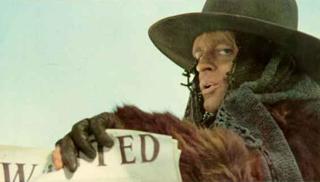
It's not on the level of white hat and black hat dynamics, but this Spaghetti western deals itself some ludicrous platitudes. One of five movies cranked out in 1968 by Sergio Corbucci, we have one guy whose Xian name is "Silence," with Jean-Louis Trintignant pulling off a finely unshaved (save for that gnarly throat scar) mute, even giving Warren Oates a run for his money. His nemesis is named "Loco." Guess which one is played by Klaus Kinski? As blatant as the character set-up is, and as hokey and overdubbed the lines get, this hasn't fallen down the memory hole due to its brutal, kill 'em all ending that drops you through the floor like a gallows swing door.

The Byrds - There is a Season
Gram Parsons - Complete Reprise Sessions
David Crosby - Voyage box set

The glossy photo that flutters out of this parcel has two pictures of the Byrds; Gene Clark, the founding member and primary songwriter at the time, is in neither one of them. The Tom Petty introduction doesn't even mention the man. Joe Tangari's otherwise adept review of the box set scarcely mentions him. Imminent on the racks is a box set for Walking Proof of There Being No Cosmic Justice, David Crosby. Hell, even thumbing one of those Back Page Epiphanies in a recent issue of Paste Magazine, I suffer through Andy Whitman masterbating over the grave of Gram Parsons. Where is the Gene Clark box set? I howl. I'm not the only one, and the Byrds box mentions how taken Bob Dylan was with Gene Clark's writing, even back then, when Clark was but hoping to bite the man's style. There's a Dylan quote somewheres wishing that he himself had written Clark's meditation on the creative act, "From a Spanish Guitar," but on almost any of his peak material from White Light, The Fantastic Expedition of Dillard & Clark, Roadmaster, and No Other you can glean a searching soul peeking through. Almost any lyric reveals an astute eye with a mind not just on earthly matters, but what happens above as well. Or as Gene once sang: "There's always a reality in what you are doing. Sometimes it's so hard to see which one is the true one." It's a sad state that none of Gene's albums (aside from with the Gosdin Brothers and Echoes) are in print in the US, but only on German, British, or Japanese reissues. Tucked inside the perfect Expedition, in a lyric about a woman now gone, lies a line that acts like a gem, glimmering from inside the stanza: "A wise man said 'What isn't there is what you want to find.'" Guess that's directive enough to track these down.

This Awful DJ at Daddy's Saturday Night
He starts off playing "Do Ya Think I'm Sexy?" and at the table we laugh at where he could possibly go from there, as surely he's peaking early. How we swallow such guffaws like so much lukewarm Brooklyn Lager as the asshole in the booth turns KONO on our asses, dropping boilerplate like "Da Doo Run Run" and, no shit, "Brown-Eyed Girl."
Even if we were stuck in a van with only AM/FM in the wilds of Pennsylvania or Missouri, we'd be switching it to Christian rock or sports radio. After a night of a Daddy's DJ dropping 45s of Howlin' Wolf and Sir Douglas Quintet alongside the Breeders and Dinosaur, and with a jukebox stocked with some of the finest selections a waterhole can ever hope to have: George Jones, Charlie Feathers, Nuggets, New Orleans funk, a slew of tuff rocksteady cuts...I mean, such obviousness is unacceptable here at the Ground Zero of BK noize-hipsterdom, right?
So is this the new Sincere Irony? Is it the moustachio vs. beardo civil war that has long been threatened on the streets? Fuck, even Jack (or Bob, or whatever those random iPod radio stations keep popping up with Metallica next to "Hang On Sloopy" next to "Raspberry Beret") is more unpredictable than this guy. And yet, with our position near the ladies' room, we make a shocking discovery: as each occupant abandons her nose-powdering (both meanings), she comes out dancing!

Sunday, October 29, 2006

vega beta


And just when I was questioning the notion of physicality at a concert, I wound up at PS1's Music is a Better Noise opening, with Alan Vega playing live. Now Vega's schtick is old, old like Iggy Pop, like the Dolls, arising out of the early 70s scene and based on confrontational rants. As I'm standing near Nibs, I express my fears that Alan Vega may actually be bald, his scully cap actually containing a dark mullet stitched into its seams. Today, even as his body no longer stands up to the strain of flinging himself into that most dreadful see, the audience, Vega does like he always does, rants and conjures breath, revels in his voice bouncing off the physical entrapment of the space, of the stage. In a way, it reminds me of another NYC noise-maker/ performance artist, Charlemagne Palestine, who is known more for his suspended dream-baby drones now (due to a slew of reissues on Baroni, Alga Marghen, and others) rather than his early performances of shaping notes in his throat and then flinging himself against walls or hardwood floors, the impact changing the sound. Similarly, Vega's painful to listen to, and almost everybody rolls eyes as his distorted, echoing caws grow in intensity, though only leading to the B-Boy slogan: "Fight for your right!" he squawks, leading to crowd titters. Or maybe it's a Flavor Flav joke now.

I tell one girl that it's like drawing a scalding hot bath, painful to dip into, yet soothing once you've slipped in, but she replies, "It's never too hot." Okay then, it's like prison sex with a duct tape condom, awful and yet --like former Texas governor Clayton Williams once said about being raped-- "as long as it's inevitable, you might as well lie back and enjoy it." It helps that Vega mumbles something about Bruce Springsteen before launching into "Dream Baby Dream," attaining such an edgy though relaxed state.

Next, we are led outside to watch a video from the K Foundation, yet another Bill Drummond project from his glory days in The KLF, this one about their public stunt burning a million pounds. Stephen O'Malley, almost naked sans his SUNN O)))) robe, hides behind a bank of eight amps. The DVD starts, and the 1995 shoot is tedious indeed. Who woulda thought that burning "a million quid" would be so boring? Jeff from Excepter leans in and whispers one word, "Work." To make that money? To un-rubberband it all? To crouch in front of that hungry fire and dump in fistfuls of dollars? To stand and listen to O'Malley fart around on a Moog? Yes. The 8 amps set-up is as ludicrous, as is the act of burning paper money, and nothing worth a shit is happening, to the point where I start to call "Bull Shit!" on the whole endeavor.

It's then that the sound of those words gets stuck in my throat. O'Malley doesn't hit the brown note per se, but he elevates into that register, the chilly autumnal air turned into a clear aspic. Ribs begin to fibrillate, all of our voices chopped and screwed as if we are yelling in front of some god's summertime fan, rattling in our necks and making everything sound funny. The vibrations also kill the DVD player. The massage continues unabated as they have to reset the K Foundation movie. Myself and a few others continue to howl along inside the thick air, reveling in the sound of our voices getting throttled out of us.

Thursday, October 26, 2006

bruuuuuuuuuceta

Mister Tamborine Man hisself

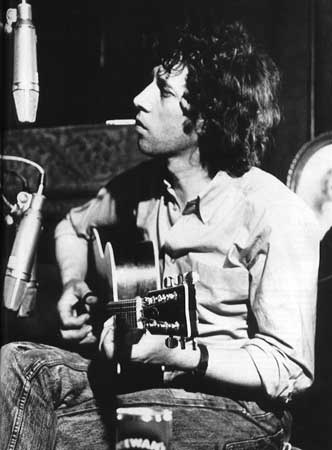
I have written about Bruce Langhorne before, regarding his soundtrack for Peter Fonda's dusted western, The Hired Hand, which I consider to be one of the most succinct moments of American Kosmische Musick (alongside Sandy Bull's E Pluribus Unum, John Fahey's America, Henry Flynt's "You Are My Everlovin'" and a few scant others). Langhorne was a cornerstone for the Village scene in the early sixties, playing with Richard and Mimi Farina, Fred Neil, Odetta, and Dylan himself. That's his solo on "It's All Over Now, Baby Blue" and he also guitar slings on Pat Garrett & Billy the Kid. Bruce, with giant Turkish tamborine in hand, is the figure addressed by Dylan on "Mr. Tamborine Man."

Stopping at Other Music the other day, I noticed a bucket with Bruce's visage taped to it. Having suffered a stroke back in the summer, Bruce Langhorne has had all of his savings sucked out by the subsequent medical bills and he's not out of the woods yet. I dropped in a few bills and if you happen by the shop, I suggest you do the same. Being a legend doesn't pay the bills, as Mr. Tamborine Man could tell you. Updates on Bruce's condition can also be found here.

I'll also use this as an excuse to post an mp3 my friend Mark sent me after I raved about some live performance of another Bruce that I found on YouTube a few months back, doing a mesmerizing, resilient cover of "Dream Baby Dream."

Bruce - "Dream Baby Dream"

Wednesday, October 25, 2006

beta beta dance


Gang Gang Dance (City Pages)

Jandek (The Stranger)


A week or so ago, my friends Mark and Julie came to town, on the occasion of Julie's dance performance down in Dumbo. My only exposure to that art form occurs only on such a perennial visit. Seated in the first row, so as to help tape off a square plot for her piece, I fidget uncomfortably watching the other dancers get limber. I'm not the most uptight dude, having done yoga for many years and still doing a stretch routine that lasts longer than most of my gym workouts, yet watching the pliant bodies disinterestedly contorting and expanding on planes I've never dreamt of in my own skin, I feel more aches and tight spots. The deft ease with which the dancers move can only make the observer's muscles tighten. But wait, when's the last public art that evoked such an unconscious physical reaction to it?

While the seven other performances have a sense of removal (not unlike playing touch football in McCarren Park and then watching Chad Johnson or T.O. tightrope a catch in traffic), of distant admiration for their abstracted movement and whorled grace, an aesthetic ease in the well-drilled effortlessness of each gesture, Julie's performance only ratchets up the discomfort level. Her piece stands out from the others in a few ways: her attire is normal, workaday business-casual; there is scant music to accompany her; and while the other dancers can be heard breathing intently as they move, only Julie has a recitation to it. And while grace and swanlike glides are the common language among the others, Julie's movements are rote and jerky, not unlike that in the house or at work or in transit, awkward, agitated, yanked from bodily awareness. My own body tenses, teeth dancing in a grind as her movements become more frazzled and crazed, her huffed words caught up in that feedback loop of daily thought. I feel like my rubber band might snap itself from the pressure.

Afterwards, I exhilarate in such anxiety, in her performance having such a grating effect on me. She talks about the feeling of being trapped, of a state not unlike "Yellow Wallpaper," an allusion to the short story by proto-feminist Charlotte Perkins Gilman. I remain at a loss to think of a recent musical event that inspired both such tension, release, and acute physical awareness and so in homage to both Julie and Mark, here are two tracks I snaked off the sadly-defunct 12 AM Maternal blog. The former is the perfect marriage of Mike Love and Arthur Russell, the latter...well, words can't quite grip its 13 minutes of dancefloor delirium.

John Forde - Stardance


Bohannon - Maybe You Can Dance

Sunday, October 15, 2006

betiamese twins


Not to get all English 1304: The 19th Century American Novel on you, but seeing as how I had to take one ramshamble interview with Califone's Tim Rutili and exact two different features from it (okay, a fancy conceit for double-dipping), here I link to my two Califone pieces by invoking Mark Twain's true classic, as messy, unresolved, and ultimately adhering to the Jim Crow status quo as Huck Finn, the unheralded Pudd'nhead Wilson: And, Those Extraordinary Twins.

(Unfortunately, the above feature turned out to be my last for The Stranger's music editor, Dave Segal. For as wretched as this calendar year has been for such a 'profession,' what went down out there was most unfortunate, not to mention stupid.)


Elsewhere:

Andy Stott
Tussle
Johan Johannsson

Thursday, October 05, 2006

Wednesday, October 04, 2006

joe beta man

It requires two eyefuls to fully absorb the pandemonic Joe Coleman show at the Tilton Gallery, not to mention two rides above 14th Street to the UES (yes, I got nosebleeds from such heights), two hours to try and process the info crammed inside each small panel of acrylic pain(t). I may be the only person in the gallery without the two marks that denote most of Coleman's audience, tattoos or piercings. Although, when I arrive at the gallery for the second time, I see the man himself standing outside. He eyes my tee shirt with its image of Kali the Destroyer and approves.

How to attempt words that will properly convey the overwhelming sensations of his work? Familiar with artbooks that attempt to capture the madness coursing through each panel, seeing Coleman's collection up close (and I do mean up close, the eyes mere inches from the wall) is crucial to grasping his demons, his inspirations. As dense and prodigal as Bosch's visions, as brilliant as any illuminated manuscript, Coleman erects his own pantheon of gods through this portraiture. They serve as both biography and shrine, these devil-detailed studies of the most hallowed of sick-fucks: Henry Darger, Carlo Gesualdo, Hank Williams Sr., George Grosz, John Brown, Ed Gein, Hasil Adkins.

More like paintings to be appreciated by the four horsemen rather than mere humans, each slate gushes information and noise like an aneurysm in the brain of a schizophrenic. Writing and musical bars enframe each picture, some set against scraps of cloth (an American flag for John Brown, some girlie fabric for Darger). One work, reflecting on the Atomic Bomb like Gertrude Stein, invokes renderings of readiation sickness and mushroom clouds and surrounds them with swirling quotes and images: the Bhagavad-Gita, Boris Badanov, Timothy McVeigh, Alfred Nobel, and the lyrics of "Secret Agent Man" all conspire in Coleman's post-apocalyptic world.

Joe's invocation of Jayne Mansfield is framed in angelic revelations and stanzas about Venus appearing on sea foam, her cunt surrounded with a crown of thorns. Coleman seeks to return her to a virginal state even as he surrounds her with soundbites from her b-movies as well as pentagrams and Anton LaVey (she was a high priestess in his Church of Satan), reveling in her sumptuous proportions while also showing her decapitated body already in decay. His other major subject is himself, turning his own story into mythology, much as his favorite subjects already have. Crafted with jeweller's loupe and one-bristle acrylic brushstrokes, Coleman accepts the fate of his faltering flesh and its precarious health; he both renders and rends him and his wife in more recent works, suggesting himself to be Vulcan to her Venus. He accepts the imminent decay of the body while also elevating it into that realm of demi-gods.

Sunday, October 01, 2006

beta can't help it

The readers of Beta Blog, the silent dozens, they generally don't turn to this illuminated page for unsigned hype, for the hottest four bars by fourteen-year-olds, for tomorrow's four-digits-sold indie rock sensastions, but I decided to finally embrace my job as a blogger to tell you about the next sensation. I just saw him spit, I think it was on YouTube, though it mebbe he was selling mixtapes outside the Film Forum, near the handball courts. You heard it hear first: Fats Murdock is gonna be huge. His single "Rock Around the Rockpile" is some sick trap-hop meets Hollywood musical shit. He's even cross-marketed into movies already with The Girl Can't Help It.

Never mind what he is actually saying. Okay, he's talking about rock, and how every day he's hustling. Never mind about his skills, what's important here is that he's been in lockdown after thirteen of his boys got gunned down in some St. Valentine's Day type of shit. He's even been shot! The street cred is thick, like Robin Thicke. To finally break out and rush the mainstream, he's even about to mix up his thug profile (which is part Big Pun, part Fat Joe, part Biggie, part...uh, Heavy D) with some R&B crooning. His girl is Jayne Mansfield, who's like the white Foxy Brown, the J.Lo if J. Lo had a front shelf rather than a back, Fergie if Fergie worshipped Satan (and perhaps had some good metaphors).

Okay, so I'm 50 years too late to hype Fats, but The Girl Can't Help It has been popping up around the blogosphere as of late (check the YouTube links here and here) and despite it's half-century age, the revealed machination of music biz hype really hasn't altered all that much. Mafioso muscles, behind the scenes shoving, even the movie itself is but a vehicle to showcase reccording artists. As a historical document, the footage is fascinating: Eddie Cochran, Gene Vincent, Julie London, Abbey Lincoln, Little Richard, Fats Domino, etc. gratuitously plunked into scenes to showcase their newest hits for a broad audience (and not just because Jayne is in attendance). Also intriguing are the failures that are trapped in the celluloid, such as the rock 'n' roll band with the accordion player.

So why does this age better than other documents? Like Mansfield herself, she's not built to last. We laugh about this the other night, watching recent arcana like You've Got Mail and snickering about the sound of dial-up; seeing Kyle MacLachlan use a brick-sized cell phone in Showgirls; watching Jerry extend his antenna on his cordless phone in Seinfeld, seeing how quickly technology renders the moment obsolete. Can you make a movie fast enough to reference Friendster before it plunges down the memory hole irretrievably? A thriller's plotline built around Napster heads straight to video (Tara Reid plays the downloader who accidentally hears an mp3 of a murder; Lou Diamond Phillips plays the streetwise and embittered RIAA agent sent to track down the killer who uploads watermarked CDs, known only online as the "brb killer").

And yet some things never change: that obscure object of desire (Jayne), brute strength (Fats), the new sound of noise (rock'n'roll, trap-hop). Working in a post-production office at the moment, where the editors are cutting a promo video for IDJ, pushing Q4 product like Rick Ross "Hustlin'"; The Killers "When You Were Young"; Rihanna "SOS"; Under the Influence of Giants "Mama's Room" so that the songs repeat all damned day in one form or another, slicing of precious seconds and perfecting segues between unrelated artists, the hypnotic effect of such cut-ups would make Burroughs and Brion Gysin smile. I almost wish that there'd just be a movie instead with everyone making blatant appearances for the sake of the product. Surely some dialogue could connect the above singles. At least then there'd be a chance of such noise resounding as glorious cinematic art in 2056. Will we have to learn to appreciate EPKs and promo videos then? Will there be revival houses for old YouTube clips?

Thursday, September 28, 2006

beddha

Booddha on the brain.

This should be read before the TV on the Radio feature, where it was meant to serve as prelude to the article, thus tying the empty nest imagery to the end joke:

Thirty spokes share the wheel's hub;
It is the center hole that makes it useful.
Shape clay into a vessel;
It is the space within that makes it useful…
Therefore the profit comes from what is there;
Usefulness from what is not there.

--Lao Tsu, Tao Te Ching, Chapter Eleven

TV on the Radio

Meditating on the "Om":
Brightblack Morning Light

Lesser deities:
Captain Beefheart & the Magic Band reviews
Bonnie 'Prince' Billy