Willie Nelson - The Complete Atlantic Sessions
Sound Team - "Movie Monster"
Public Image Limited - Metal Box reissue
(and further down, me on the recent Sublime Frequencies set)
Jose Gonzalez - Veneer + The Knife - Silent Shout
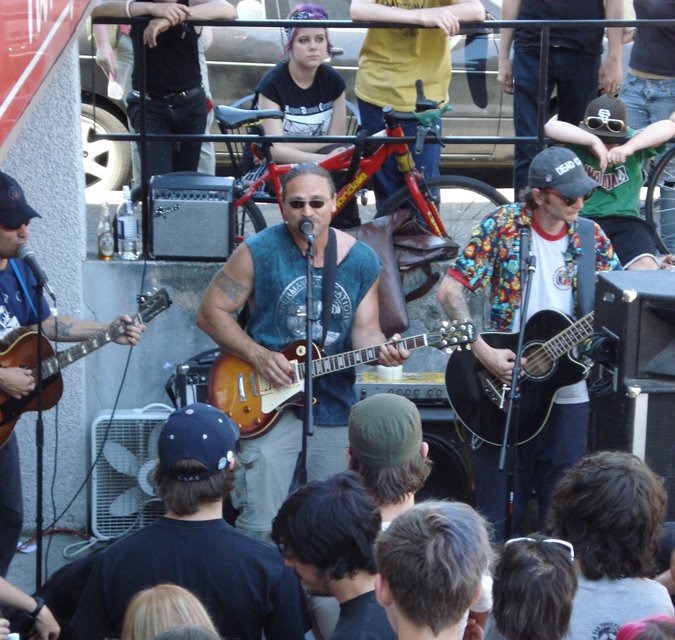 The legendary hardcore band, Millions of Dead Cops! No, really! At a vegan potluck!
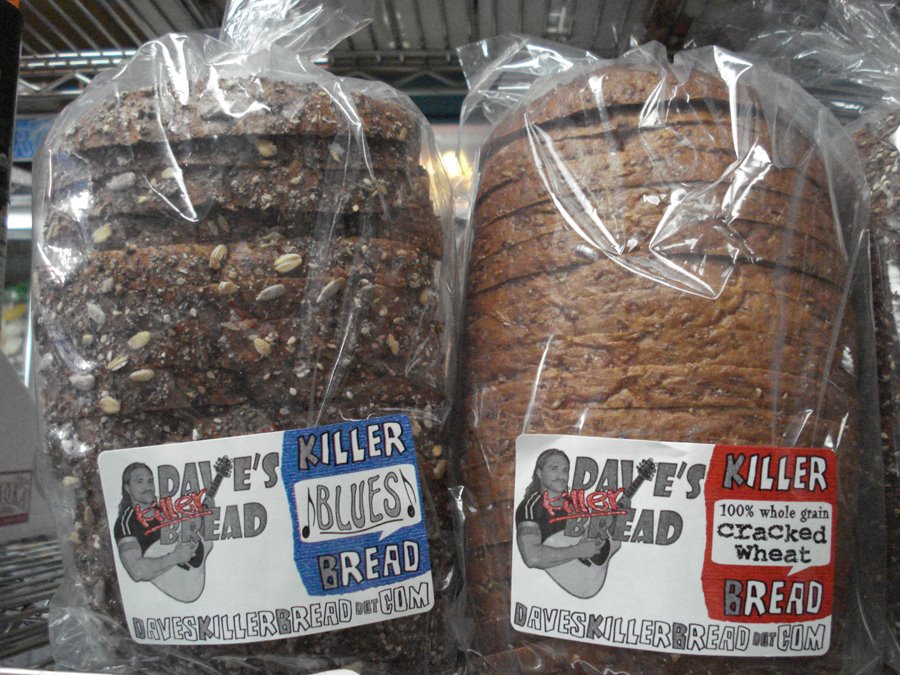 They may also be Bread fans, as this is an acoustic reunion show. I spy a pair of bongos, but don't see them get babbalooed. Instead, they offer whispery, quickly strummed versions of their back catalog and maybe the worst version of "Happy Birthday" ever attempted. Unplugged highlights include "Corporate Death Burger" and "Kill All the Cops." The latter is so catchy that the kids sing it in the car over and over again. It sounds better than both Mr. T Experience and Raffi, while also carrying an important message for all kids to learn.

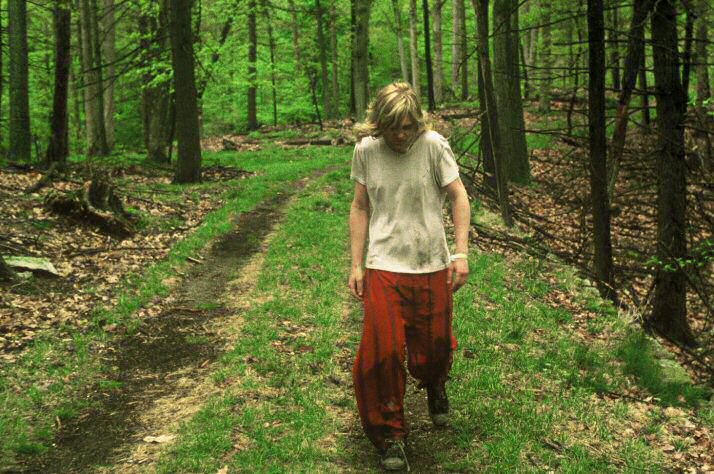
 My host Marshall in Eugene, Oregon informs me that it's actually Springfield I am in, and that neighboring Springfield, Oregon is actually Shelbyville. The town square does indeed bear a vague resemblance. Look to the odd pioneer statues of one Eugene Skinner, to the preserved homestead of the man that stands near the Willamette River. By the muddy banks, I fully unravel and feel the vacation kicking in; hours pass just watching the patterns that leaves make in the wind, dappling sunlight and shade across my chest as I sprawl in the soft grasses and read or else stare into the sunny sky. The grass is different in Oregon. (Uh, not that kind.) In Texas, the landscape accosts you like cops do; stickers and burrs gouge, there are sharp crenations of weeds. The blades themselves make you itch. And where there aren't mosquito swarms doing fly-bys, there is always the threat of being brutalized and burned by fire ants. Plopped down in the grass here, all feels benevolent. And I don't even need to pull out a hackey sack or digeridoo.
 In a way, I'm glad that the jewelry store isn't open when I rush over there as if to complete all my chores before my flight. My watch battery remains unfixed, my inability to either manage or be on-time has a really great excuse now, even as I try to catch a plane. What it means though is that I can no longer gauge how long we sit on the runway, how long the flight takes, much less how long my enormous layover in Denver is. Too tired to do the math when I finally arrive in Seattle, let's just presume it's been a long fucking day and by not affixing a number to it, perhaps my jetlag won't take hold.
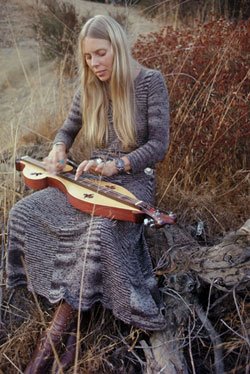 "The Circle Game": A feature on Numero Group's Ladies from the Canyon compilation in LA Weekly
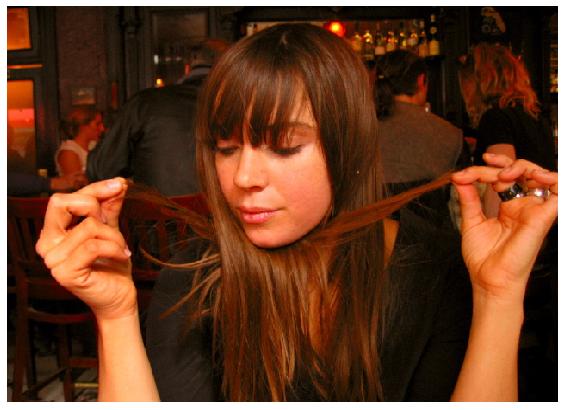 In a recent New Yorker article, Samuel Hynes recalls a line Ezra Pound says to him when they happen upon each other in a park: "It's difficult hanging on to the truth while admitting error." It stings especially so as a critic, where your opined words must remain sharp and 'right,' rigid and affixed on a page that floats about in an influx world, where perception necessarily must give and be pliant, ever-changing. I wasn't the only one underwhelmed by Cat Power's The Greatest, finding it to be too shorn of its edges. Where were the jags, the bared edges, the emotional upheavals and artistic crises that flow about her so readily, her destabilized persona suddenly a part of her presentation?
 In Les Blank's documentary on the torturous struggle between man and nature as captured in Herzog's filming of Fitzcaraldo, Herzog reduces the film's essence to a cast-off comment that the natives recognize in the man a kindred spirit, a white man that grasps that it's the everyday life that's the illusion; the realm of dreams is the only true world. (Or, if you're a rock critic, it's like Frank Kogan's assertion that "Elvis never stopped being a truck driver with dreams; the point is he dressed himself in the dreams, not the overalls.")
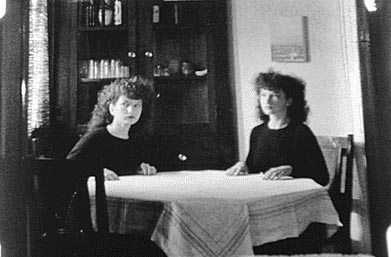
She became certain of myriad lives within herself. Her sense of time altered. She felt acutely and with grief, the shortness of life's physical span...but Sabina, activated by the moon-rays, felt germinating in her the power to extend time in the ramifications of a myriad lives and loves, to expand the journey to infinity.In Deren's hands, such a dream effect appears effortless: real events recapitulate and mutate, the subconscious pulling at such small matters until they are distended, profound. What seems to be normal and everyday is suddenly plunged into the reality of disorienting, enigmatic, unanswerable dreams. (Forgot to mention that Nin herself appears in Deren's "Ritual in Transfigured Time.")
 Quotidian objects toggle between identities: keys are knives, are books, are mirrors. The knife is for cutting a loaf of bread, is for murder, is for the reflection of light, is for the death of self in suicide, is but a dagger of the mind. The inner-eye of Deren continually arranges, deranges, and makes explicit such dreams, its wheels within wheels.
 On the subway, I catch a glimpse of a girl through glass, a girl that I tried to date right when I first met my friend. At the time, their outward similarities were curiously parallel, and yet as this girl walks into the distance, to the vanishing point (no, there's no black cloak, no mirror face), I realize that in another reality, this would be the girl I watched basketball with instead, that I opened my heart to. My world just took a slightly different bounce. The gestures between two people stack up in one instance, withdraw in another. To think it all started with just an instant of her hand alighting on my chest. How that touch has amplified beyond such an innocuous beginning, how it bounces still, the reality always uncertain.
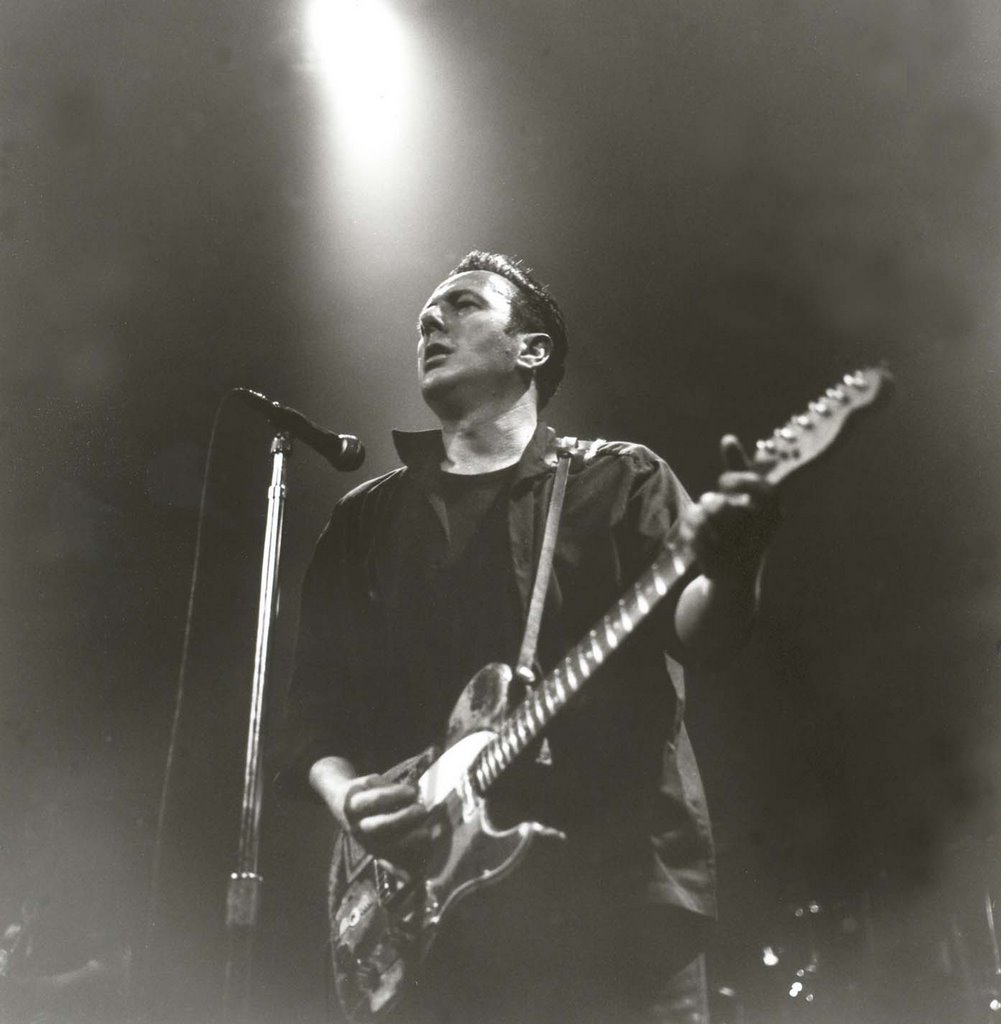 My friend and I were truly desperate, trying to find something of value on the satellites come Saturday late night. Infomercials, heavy metal's most metallic moments with the bat blood drained from them, surely a documentary on the Clash was what we needed to feel re-invigorated. Yet the documentary on the band produced for the Documentary Channel makes the band about as boring and pasty as they could possibly be, totally PBS'd, as Frank Kogan might call it.
 We switch instead to one of those Time-Life half-hour ads, hoping to find a couple of polyester clips of Harry Chapin, Little River Band, or Billy Paul. Instead, it's the sound of soul, and while watching a clip of Otis Redding, my friend suddenly shrieks: "HOLY SHIT! Did you just see that?" Since she's got the DVR in effect, we rewind back to the footage of Otis Redding going at it with the Bar-Keys behind him. Bent forward, belting in that way of his So. That. Every. Word. Sounds. Capitalized., she pauses it so that we can see it: more than halfway down his thigh, Otis's giant manhood distends his shiny seersucker suit. We laugh uncontrollably, knowing that we'll never hear soul classics like "I've Been Loving You Two Foot Long" and "That's How Strong My Love Muscle Is" in quite the same way again.

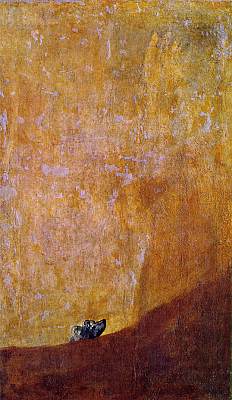 Afternoons in Madrid linger with me some five years on. My belly full of odd meat gelatins (or some pork curio from the Musee de Jambon with its walls of waxed pig legs) and that treacly pull-tab wine made effervescent and poppy with fizzy water, I would move my buzz over to the Prado and plunk myself down in front of the paintings of Francisco de Goya. (Not that it's the only thing there; aside from Hieronymus Bosch's "Garden of Earthly Delights" the Prado has a titillating amount of holy pictures depicting virgin teet milk squirting across otherwise normal biblical scenes). In the main collection are his most acceptable works (like "The Naked Maja" and "Third of May 1808"), rendered during his time as a favorite of the Spanish court, with sketches of bull fights and quotidian life in Spain, or else works gleaned on linoleum or lithograph. There is not yet a medium that Goya worked in that I did not find infused with humanity in every form, the flashes of beauty and brutality tucked masterfully into the actions of the everyday.
 In these black paintings, Goya most readily ascends to his place as the father of modern art. Such unflinching depictions still resonate in the present. Embroiled in a fight with my best friend at the time, the paintings of fighting cats and the one of two men hacking each other apart with cudgels are disturbing and ever-relevant, an existential precursor to a Monty Python skit. These ghastly paintings are almost always tempered, edited outside of the walls though: the long wide painting of a witches' coven in almost every art book is cropped so as to leave out the immense black goat-headed idol that the huddled women orbit in devout worship, reproductions of a dog helpless in quicksand never quite captures the astounding texture of the amber backdrop.
 The sketches here are rendered in layers of black crayon quickly and with a master's ability to shorten time with a few quick strokes. Hazy sooty clouds obliterate subjects, seeking to return to oblivion, and the white figures captured on the paper only temporarily contrast and escape their grip. These figures in an indeterminate field have hideous, demonic faces swarm around them. The crayon rubs are gone over by a finer tip, elucidating faces and features that would otherwise be hidden and occult. Even the classical painted portraits once predominant in his oeuvre are rendered with only a few dark colors. Amid such obsolescence, these faces glow, fight back, flicker brightly against the oppressive, endless night. There are sketches of sanitarium inhabitants truly beset by devils and lunacy, but even quarreling domestic couples are surrounded on all sides by demons, witches; madness can come at any moment.
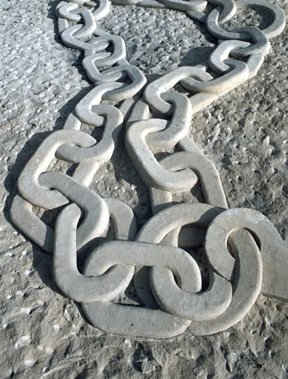
 Yorick's skull to be (or not to be).
 In Gates of Heaven, the pill is blamed for the rising cult of pet-dom, a pacifier for unfruitful mammas. Randomly coming upon the televised feeding of a komono dragon late one night, I watch the giant lizard lash about in giddy response to the trainer's whistle, anticipating that meal of live rats forthcoming. Pavlov woulda been proud. The love between the two is tactile, the exchange queerly mutual, one less of pet-owner (or even zoo denizen-zoo employee) and between two sentient beings that perhaps don't quite understand one another but at least respect the relationship they have somehow forged in this world.
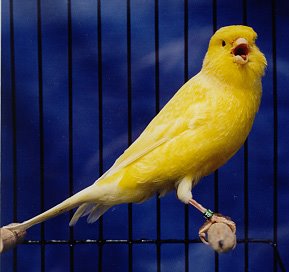
 If only he'd been shot before he could form Zwan.
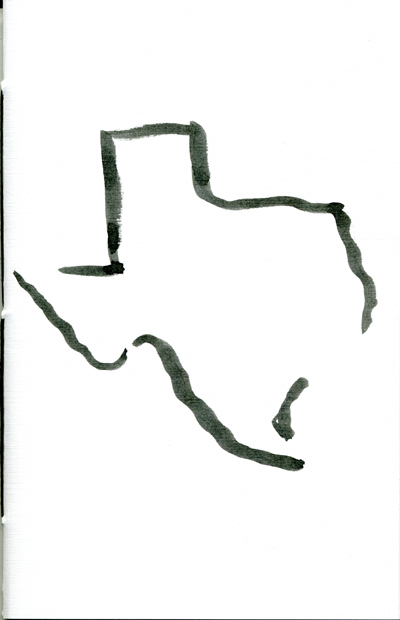 Ten plus years in the making, I have finally finished writing, editing, printing, folding, awl-punching, hand-stitching the spines, and hand-painting the peculiar shape of Texas (flat-top haircut, panhandle, fat back, third coast, and boot toe) on the cover of each and everyone of these poem chapbooks I made documenting a decade's worth of writing. From high school notebooks to the weird lysergic commune scribbles of San Antonio, from writing poems while seated at my desk in the Social Security Administration office to the strip of La Rambla that runs down Barcelona, from the farms and chicken coops of Gillett to the skyways between there and New York City, it's all in here on the finest weave of paper and card you can run your fingers over. A one-time only run of thirty, twenty are already earmarked for family and old friends, but the remainder are up for grabs here. Ten will cover price plus shipping. Those who know know how to get at me, otherwise drop a line to: a n d y b e t a (AT) g m a i l.